Wednesday, 29 January 2014

Our first mobile release

The last two years have been all about learning. Now we have encountered yet another possibility to learn when we launched our collectible card game Permia - Duels in Windows Phone store at 14 Dec 2013. After about one and a half months and almost 100 000 downloads later we have had first few small ideas what it means to publish a game in a mobile market place.

Earlier we only had experience of releasing game in a small social network Habbo hotel and it has been very much different experience.


Update delay
First of all, we cannot update the game currently whenever we want to. We have not yet implemented the feature that allows us to update the content for the game directly without going through store certification. That is something we definitely want to do in the future. Already we had an issue where Lumia black update changed the way some configuration for the viewport of the game were defined and our game was broken for all the high end devices with HD resolution. You can imagine how grateful I am for Microsoft Store certification team that handled the update in two days instead of one week just before our promotion all over the world started.  All the previous review periods were closer to that one week. Even if the certification goes as fast every time in the future it is still at least couple of days after we have the new version ready before the players can use it.

Analytics
All the data we gather from the game and feedback that we follow have helped us to react to the problems much quicker than it would have been possible without these. We have found couple of bottlenecks in our server code after the release and both times it has been the same. First active user tells that something does not work like it should. Then our ratings start to decrease. These are enough reason to start studying what is the problem. Then simple analytics that we gather from the game pinpoints the place where the problem lies. Both times we were able to fix the bottlenecks in one day after they first started to encounter. For the team that is as small as us I feel that it is amazing to react that fast.

Ratings
These seem to have power of the god. When we did not ask our players to rate us at all, we mostly got bad ratings. It seems that people remember to tell if they don't like the game or the game does not work much more often than if they like the game and we don't remind them to do that. Permia - Duels average rating was less than 4 before we implementeda "rate us" dialog in the game. We don't want to interrupt the player, but it is crucial for our game to have good ratings. Without good ratings, we don't get promotion from Microsoft. Without good ratings, players do not download the game and because our game is multiplayer game, our game cannot live without plenty of players. Everything starts from ratings. How cruel that is when you are not going to buy those ratings for you. We don't want to buy ratings so we decided to add the dialog. After we had the rate us dialog in the game our ratings have gone up to 4.4 average and still growing. We have had much more ratings than before and it has helped us to get promotion and more importantly the players as well. Yet another story is that only good rating is five stars. All the other will weight ratings in wrong direction. Average 4.3 is minimum that is expected from us.

Reviews
We had an excellent review from WPCentral. We advertised that in our Facebook and Twitter accounts. One day after that we got an excellent review from WP player ratings. We advertised that as well in our Facebook account. I was quite amazed how big difference was with the impact those messages had. The player review was seen by six times more people than the WPCentral one. With this case it seems that people are more interested about what other people say than what media says. The article in WPCentral reminded us about importance of the social media. We really have not been active enough to promote our social media sites. We have had over 1 000 000 players playing our games and we have little over 160 people that likes our Facebook page and little less than 100 people who follows our Twitter. We will test with next update if we can get little more players to follow us because social media is currently best way to notify our players what is happening.


Some final words
I have to say that we feel very welcome in Windows Phone environment. All the great feedback has given us strength and motivation to continue with the path we have taken. We are long way from the product we have in our vision. With the help of the players we will go towards that vision and continue delivering new features one by one. First couple of months we will use to make sure that everything works like it should. We create small adjustments to the game and after we are satisfied with the maturity we will start bringing new features to the game. If you have Windows Phone 8 and you have not yet downloaded the game, now is the perfect time to download it. :)


Tuesday, 21 January 2014

Pains of UI design, part deux - (dis)similarities

There is one more topic I want to touch on briefly before going into specific UI issues. Are game UIs different from “regular UIs”, i.e. user interfaces in non-game, productivity or entertainment applications? I gave a short lecture on game UIs a while back and this was something I brought up then.

I believe that the key differences are:
  • In game UIs, you can occasionally justify putting aesthetics before function
  • Games often require rapid user response
    • Even turn-based games usually limit the time available to a player
  • Psychologically, the fact that games you usually volunteer to play probably makes a difference

Tetrablok sea UI draft
As for the third point, I am sure there are a great deal of productivity applications people volunteer to use. Still, I believe that when you fire up your favourite game, your mindset is somewhat different compared to say, editing holiday photographs (which, I am sure, can be a lot of fun. Photoshopping your mother-in-law into all sorts of hilarious scenarios… we’ve all done it). Even if you occasionally stray from your goal (removing those pesky red eyes), the task itself is far more goal oriented. Gamers, in the main, play to entertain themselves. I am, of course, aware that some gamers are goal-oriented achievers who resolutely work towards a set goal; however, I shan’t digress into the domain of games psychology and player types now. Instead, consider this a preamble for my next point:

It is my firm belief that when designing game UIs you can, occasionally, put aesthetics before function. Emphasis on the word occasionally. Your UI should be designed to, first and foremost, be functional. Frustrating but pretty UIs are just – here comes the pun – pretty frustrating. It comes down to, or so I believe, to psychology. In games, you occasionally expect fireworks and you are more likely to forgive slight usability issues in favour of aesthetically pleasing presentation. Microsoft Excel (okay, pre-ribbon Excel anyway) is a great tool with a pretty slick UI and yet most people would agree that they expect something different from games. In a game, I can often justify placing a button in a sub-optimal position to make room for pretty pictures. Often, you will choose to display numerical attributes in non-numeric form (e.g. progress bar, pie chart) just because it looks prettier. Occasionally the graphical presentation adds value and makes the attribute easier to comprehend. Sometimes it just looks better. I could go on.

The second point, which I’ve strangely decided to elaborate on last, is probably the most self-evident. Many games require fast reflexes and in-a-fraction-of-a-second decision making. Please, allow me to put aside the whole topic of game controllers. Also allow me to ignore the very extremes of fast-pacedness – FPSs and the likes. Controlling your character in FPS games is more about the controller than the UI. Ditto for most games where shortcut keys are the primary interaction method. Game controllers are a fascinating topic but I will stick to UIs for now.

Turtle illlustration from Seepia Games' TetrablokNow that I have conveniently (if somewhat cravenly) narrowed down the gamut of game UIs to consider, we can pit games against productivity apps. If I am permitted to rule out a few games more, let’s assume there is a time constraint of some type embedded in the game mechanics. In Seepia Games’ games, the constraint is usually time per turn. The time constraint has a number of functions: it forces the player to work his brain more intensely, it can be used to control the maximum duration of a match and, perhaps most importantly, it protects the opposing player from dissatisfactory ennui. This sort of artificial time constraint rarely exists in the realm of productivity apps. High pass-through rate (completion of a form, process etc.) is desirable but I cannot think of many scenarios where it would make sense to impose a time limit on the user. Such limit could even backfire causing stress and lowering productivity.

The question then becomes, are games and productivity apps different after all in this sense? Prompt, precise response is the desired user interaction either way. Games simply add a “sweat factor” – the time limit. Therefore, I am happy to accept that the chasm between the two is not that wide after all.

So, I posit that a good game UI looks good but still follows the usual principles of good UX design: it works with the user, not against him; it stays out of the user’s way and lets the user focus on the fun parts; and finally, it excites the senses and tingles the bits of your brain that appreciate aesthetics.

There is one more aspect to this I have not discussed now but to which I may return in future – learning curve. A topic for future post, perhaps.

Thursday, 9 January 2014

Twenty fourteen (and a little about 2013)

Happy New Year and… drum roll please, happy 2nd birthday Seepia Games. Yes, we’ve been at this for two years now. Little longer in fact, Seepia Games was accepted into the Finnish company register in January 2012 but we did get our hands dirty a couple months earlier.

Anyway, 2014. We released Permia ‑ Duels for Windows phone and on Habbo Hotel last month and will now start working to bring the game to other platforms, namely Google Play and App Store. We also have a lot of new players to take care of now so staying in touch with you all is a priority.

The feedback we have received has been great. Our players have supplied us with useful bug reports, helpful feedback, good suggestions etc. Even those who have disliked the game have been very forthcoming – we do like to also hear from those who tried the game and for one reason or another did not find it enjoyable. Keeping an open mind and listening to the players is paramount. In our first update, we added a number of new languages (e.g. Russian, French and German) and made some changes to our ranking system.

We’ve had many questions about our pet-themed game, Pet Shows.  We are (finally) making progress on this front! The game is coming along and 2014 has given us some new ideas. There is not much more to say yet, but we hope to have the game in alpha stage quite soon. It probably comes as no surprise that the alpha launch will be made in Habbo Hotel. Just bear with us a little longer!

 I don’t like to make New Year’s resolutions (no one ever keeps those promises anyway) but I will say, promise even, that Seepia Games will continue to interact with our players, listen to feedback and make great games.

Have a good year!

Friday, 29 November 2013

Journey of game designer

Welcome young designer! Here for my help you are, yes...?

Yes, O lead designer! I have the greatest game idea in the world and I want to found my own game company, what should I do?


"Love games you must!" Are you crazy enough to work long days for years without vacations, salary or any guarantee of eventual success to see the dream to become reality?

"Yes, you say? Good, great potential in you I sense." Then you will only need to find others who share a similar vision and have the right skill set to form a team. Finding the right team is the most crucial part in setting up the company so make sure to pick the right people. It's better to have no one than the wrong one.

I'm scared that someone will steal my great game idea, how do I protect it?


"Worry, you should not." The game industry is not short on ideas, everyone has them. Your unique idea is likely not nearly as unique as you might think. As such, ideas themselves have no real value. The value is in the ability to make quality games out of the ideas. And for that, you need a lot of feedback from anyone who is interested in your game as early as possible.The real risk is that you get too little feedback and fail to make a good game as a result rather than someone stealing your idea.

Oh well, could you take a look on my plans then? It's all here in the 750-page design document... 


"Ready the design is, hmm?" Creating too detailed plans early on tends to be a waste of time and resources. The plans should be kept on a high level at first and just start doing as soon as possible. Prototyping can be used as necessary to learn what works and what does not. Prototyping can be used as necessary to learn what works and what does not. During the process you will learn and the game will change so much that your original plans will be outdated in no time. As resources are limited, prioritizing is essential. The first goal should be to implement only the absolutely minimum setup containing only the very core of the game and get it right through testing.

But the design is already perfect! I don't want to make changes that taint my vision!


"A great designer, hmmm...? Learn humility, you must." It's good to have a strong vision, but it should not become a principle. A good game designer is always ready to listen and adapt the ideas. Don't fall in love with your own ideas. If something does not work, fix it or ditch it without second thoughts, no matter how much effort or love you have put on the idea. Always be ready to question any and every aspect of your design as well as the design as a whole. 

Well, how do I know what works and what does not?


"To listen, you need learn." Mirroring your own ideas to all the feedback you get is the key. Be it from the players, the data you collect from the game, testing sessions, other team members, things you learn by playing other games or any other source. Never dismiss new viewpoints at first hand, even if they seem unrelated or contradict your own vision. They rarely come in clearly understandable form. You need to always consider what is the heart of the idea and can it be used  in some form to make the game better? Best ideas often come from unexpected sources.

Okay... Do you have any advice how to make the game a success?


"Easy will it not be".Game industry is a hit business. Only the best succeed, nobody cares about mediocrity. You need to be able to stand out with something, be it the original idea, polished mechanics, great story, known brand, special style, unmatched gameplay, innovative controls, less contested category or distribution channel, superior marketing plan or anything else you come up with. Don't polish the game forever before publishing but don't publish crap either. It's better to have half of a game that works than full game that doesn't. The rest of the features can be added later once the potential of the game is confirmed.

How can I be best with so many games around?


"Learn from others you must." If something has already been done, make sure you don't make a game which does the same thing but worse. Making a game differ from another is a wrong motive to do changes: if you can not improve an existing concept, use it as it is. If this would make you game a copy of an existing product, you are in wrong market. If you can not honestly say that your game will be better at least on some aspects than your most direct competitors, the game is not worth making in the first place.

Oh... Any more concrete advises?


"Bite more than you can chew must you not." Always consider the resources you have available. If your game concept is too big for the available resources, do something smaller first. Don't let the project bloat with new features, concentrate in getting the game ready first. Concentrate on one project at a time and give that your full attention.

"Also remember finances you should." As cool as it is to make games, if you can not make money from them, the company will be short lived. Especially in the free-to-play world the monetization is an important part of the design process. It must be taken into account from the start to integrate it flawlessly in the game. Poorly designed monetization can easily destroy the game balance and player experience. And of course, if people don't know about your game, they can not buy it. Be it a publisher, marketer, self marketing or a combination of those, the earlier the marketing is planned and started, the better.

"Pick your battles, you must." Challenging the big studios and their huge resources in the AAA market might not be the most productive idea. Luckily game industry is in the middle of big changes and many of the trends favor small indie studios.

What are these trends you mention?


"Opportunities I see, hmmm..." There are several big trends currently in the game industry which offer possibilities for small companies which are willing to adapt to the rapid changes. Digital distribution, rise of mobile and social gaming, triumph of free-to-play business model, popularity of crowd funding and the possibilities of cloud computing are among those. Technologies like Unity3D and HTML5 allow easy ways to make multiplatform games and not be restricted to a single platform and it's success or lack of it.

Thank you O lead designer! I will now retire to meditate on the wisdom you shared.


"May the ideas flow freely from you, my young designer. Farewell."


Monday, 11 November 2013

The pains of user interface design

Designing good user interfaces is hard work. That is a given. Designing good user interfaces for multiplatform games doubly so. For us, multiplatform means everything from mobile phones to web browsers. This, together with limited resources, makes user interface design a real challenge. This blog post will start a series where I alight on a number of issues we have faced in terms of UI design. In this first post, I will not delve too deep into any specific UI issues. I will instead give you an overview of where we are coming from and how it affects our UI choices.

In the web design world, one of the biggest contemporary trends is response design. In summary, it is a change of mindset from “we need a desktop site, a browser-optimized version and a mobile app” towards “we need a website that works across all devices”. This is achieved using fluid layouts and a number of other techniques (see Wikipedia). Responsive design makes content a first-class citizen, a position it rightly deserves. As a bonus, this tends to lead to far less crippled mobile services (go find a handful of news websites. Now, visit their mobile sites and see if their comments functionality is still there).

The reason I mention responsive web design is simple: it has made the web far less device-oriented. There are other positives but for the purposes of this post, the moving away from designing for particular devices is sufficient.

In our minds, simply porting your game to another platform does not make it “multiplatform”. We see multiplayer games as games that do not build barriers between players just because they happen to play on a different platform. Games, where you can transition from one device to another, using one account. Games, where the device is really just an access point into the game.

We believe this “access point” thinking is the future of serious mobile games. Unfortunately, it also makes user interface design a far greater challenge than it would otherwise be. Now, if we had the time and resources to design the interface separately for each “access point” (desktop browser, tablets, mobile phones etc.), life would be easy. Alas, we cannot. We have to design UIs which work on the entire range of devices our games support. We must be mindful of available screen estate and make sure everything is readable even in the smallest displays. We cannot rely on hover effects because of all the touch devices. We must take note of platform specific features (e.g. the availability or absence of a hardware back button). Good thing we don't mind challenging undertakings.

In the next post, I will talk about some UI designs we have chosen and I will also go over some specific issues we still need to tackle.

Monday, 28 October 2013

Thinking agile

Personally, this is my first ever blog post. I am the CEO of Seepia Games. It means that you can blame me if anything goes wrong. If something does not go wrong, please ask me and I will tell who you should thank for it. For me, it is good to start with agile way of thinking. That is something I am known for if you trust LinkedIn endorsements.

For Seepia Games, agile means focus and readiness for change. It is also good not to be afraid of making mistakes.

Ready for a change

Things very rarely go as planned. There are different reasons for that. Sometimes plans are way too optimistic. Those who know me know that my plans are always way too optimistic. Sometimes you don't have all the information available that will affect the execution of the plans. That one has drastically affected us. Agile way of thinking gives us the possibility to change our direction. There have been multiple situations already on our journey to use this possibility. One of the biggest one was changing our target from creating Permia - Tournaments to Tetrablok and Pet Shows games. First eight months of the company were used purely for creating a hardcore collectible card game. We created the working prototype and even a first closed beta version of the game, but we did not manage to find a funding publisher for the game during our trips to the different parts of the world. Then we encountered a possibility to have some funding for a couple of smaller games targeted at the Habbo hotel. It was a very fast decision from our team. On Thursday we had a discussion with a project funding organization that they think that we should make small games to Habbo. On Friday we had a board meeting and on Monday we had two game idea suggestions for the project funding organization. Few weeks after that we froze the development of Permia - Tournaments and we started building two new games.

Focus

Small team do not have time to do wrong things. Keeping the focus is one of the most crucial and hardest thing to do. Ilkka Paananen from Supercell said in a presentation that for them focus means saying no. For us it often feels that there is about three times more things to do than we have people to do it. I think that it is quite common with startups. This means that the team has to prioritize all the time what to do. We have had a very good understanding about our vision and what are our strengths. We have not been very good at explaining that to others though. Even so, we have made quite many mistakes that can be counted as loss of focus. One of the biggest mistakes for us was to start doing two games at the same time. We currently have a team that can effectively do one game at the time. About six months ago we decided to concentrate on one game even when we have a pressure from the customers, partners and from ourselves. That is the only way for us currently to keep the quality of work at a high level. Agile way of thinking reminds us to prioritize most valuable tasks at the top of our task list.

Mistakes

Everybody makes mistakes. It has been less than a couple of years that we have been working to build our game company. I can count multiple mistakes during that time. Mostly the reasons behind the mistakes have been lack of experience and knowledge. Some are based on our personalities and some just because we have not had time to process the information enough. When you make mistake based on lack of experience and knowledge, you may think that if you had used more of your time making studies and plans before making the decisions, you would be making less mistakes. One can use all the time in a world just learning, studying and analysing. When do you know that you have enough information. For me I don't even try to fool myself to think that decision I make is the only possible one. For the current information I have, it feels like it, but tomorrow when I have more information my decision might be different one. The agile way of thinking gives us a possibility to make decision based on current information. With keeping the focus we go full speed ahead and if or when we encounter new information we can change our direction based on new current knowledge and experience. It is not a problem, if you make mistakes. It is a problem if you don't learn from them.

Results

Our focus is in cross-platform multiplaying games. We want to give our players good entertainment with some need of using brains during the game play. We have created platform that enables us to create good quality multiplaying experience and that enables us to concentrate on game content in a long run. There is still much to do before the platform is ready and productized but it is in a very good shape already. We have published one game in Habbo hotels globally. It has been translated in 11 languages and over 850 000 people have tried the game. Earlier this week we delivered our first real release candidate for Windows Phone 8 store review of our Permia - Duels title, the first Permia-themed collectible card game. Release date will be published in near future.  Our third game Pet Shows is close to be ready as well. It has been in that phase already about half a year, but because of our concentration for one game at the time, we have not had possibility to finish the game. Currently we are three full-time entrepreneurs, one part time architect, one advisor and a partner organisation. We thank all the customers, trainees, board members and subcontracting partners from the journey so far.

Please, sign up for the Permia - Duels beta.


- Jani Tietäväinen / CEO of Seepia Games

Tuesday, 22 October 2013

Luck in games

One of the big questions in game design is the luck factor: should there be any luck in a good game, and if so, how much? There is of course no right or wrong answer here as different people prefer different games. What I'm going to write about today is my take on the different aspects of luck in game design.

Image: Lee Daniel Crocker
A good, classic example of a game without any luck is of course Chess. While the design is solid and has stood the test of time, I'm not myself a big fan of pure skill games like that. They tend to be a bit too serious and dry for me. Rather, I enjoy games with enough luck to keep things interesting, but not too much to take the feeling of control away. Let's take a look of different ways of adding luck to a game.

Dice rolls in action results


When talking about luck in games, most people think about dices. In chess every action has a clearly defined and guaranteed outcome: a piece always kills the opponent's piece in the square it moves to. In Risk, the result of an attack is decided by a dice roll instead. Games that add uncertainty directly to the action results define the probabilities for different outcomes of the action and then roll a dice to decide the actual outcome. Typically, the player has ways to affect the probabilities and decide the desired actions. The decision is based on the possible rewards/penalties of the action as well as the probability of success. 

Including this kind of a luck element may easily take away the feeling of control: it's natural to think that when I have a 75% chance to succeed, it's a guaranteed success and won't fail. When it does fail (which happens every fourth time in this case),  it often feels unfair, especially if it was an important action. On the other hand, such an uncertainty can add a lot of tension to the game as one can never be sure of the outcome. As such dice is best used for actions that are repeated many times to even out the dice rolls. It is a dangerous approach to be used for major actions that can change the course of the game.

Accuracy


ImageXiaphias
Another way to add uncertainty to actions is to add a dexterity element into the game. Examples of such games include Angry_birds, Jenga, Pool, BowlingDarts and sports in general. Truthfully the accuracy element in this kind of games is directly dependent on the player's skill and thus the word luck does not describe it well. Still, when we compare Chess to the games listed above we notice an interesting difference: Chess is all about strategy and a huge decision space, where one needs to be able to outhink the opponent. Once the move has been decided, the execution will always succeed. In bowling the strategy is very simple: always knock out all the pins. It's the execution part that makes the challenge as even the best players are not able to do that consistently with every throw.

Adding an accuracy element to a game can make otherwise very simple game more interesting and challenging. A good example of using accuracy as a minor element in a game is HellFire. Both HellFire and its predecessor Rage of Bahamut are essentially sophisticated card collection systems with very simple game mechanics. In Rage of Bahamut, battles are decided almost directly by the card stats, while in HellFire the opponents employ weak points to which the attacks should be aimed at by swiping the touch screen. This adds an interesting accuracy element to the battles as skilled swipes give an advantage over poor ones.

Complex action chains


A slightly different approach to accuracy is found from the attacks in Clash of Clans. The game is essentially a multiplayer tower defence game, where players build their villages and decide the defensive tower setup. Then other players use their army to attack the villages and try to steal resources and points. An army may contain over 200 troops. While placing a single troop is simply a tap on the screen, deciding the order, timing and placement of the whole army offers almost endless possibilities.

After being placed onto the field, each soldier automatically attacks based on its behavior model which is defined by its type. The behavior is predictable and thus in theory there is no luck involved, except traps and invisible towers which are hidden information and thus not completely predictable. But even without those, the sheer complexity of the setup means that it's not possible to exactly predict what will happen. It's a common thing to see my troops go to a completely different direction than I predicted and then get slaughtered by a tower they should have destroyed earlier. This unpredictability keeps the attacks interesting as there is always the chance of failure. Yet,  the failure does not feel unfair as the result was not due to an unlucky dice roll but rather the decisions I made.

The challenge in complex action chains is in the execution part similarly to the accuracy element. The difference is, accuracy uses independent actions which should all be executed perfectly. In complex action chains, the actions are are simpler by themselves, but not independent and the goal is to execute the whole action chain flawlessly.

Hidden information


Many people have asked me why do we keep the opponents hand units hidden in Permia - Duels. Wouldn't it be better if all the information was always available to both players, like in Chess? As you might guess, my answer to the guestions is no. But why is that? What do we gain by hiding the information and adding a luck element to the game through that?

Opponent's hand is hidden during a match


In games like Chess, where all information is always available, the only limitation when deciding the strategy is the computational capability of the player's brains. This makes the decision base huge and easily leads to an "analysis paralysis", which means that the players can analyze a single move for ages if the time is not limited. Of course we can limit the time, but again, it becomes a task of analyzing as much of the available information in the given time as possible. For me this kind of games often feel dry and exhausting to play as there are no real surprises, only raw calculations and memorizing chains of moves.

Hiding opponent's units takes away some of the strategic depth and puts more weight on the tactical side. One cannot calculate the exact strategy for the whole game at the beginning as all the information is not available. Rather, the decisions must be based on the own units and their strenghts and one needs to be able to adapt when something unexpected happens. This drastically reduces the decision base at the start of the game and makes the game feel lighter. Additionally waiting for an opponent's moves is more exciting due to the uncertainty: "does he have the unit which wrecks my cunning plan or not?" Rather than knowing all in the beginning, one needs to try to deduce the opponent's hand during the game based on the units he has already played. This adds the possibility for bluffing, which is another element not possible in a full information game. Simply put: for me, games that have hidden information tend to be more fun to play.

Limited options


Another way to reduce the decision base of a game is to limit the options the player has available at once. Good examples are most card games, where the player's hand decides the available actions while the deck defines the whole actions pool. The player typically knows what to expect from the deck and thus has a vision of the grand strategy, but the decisions which cards to use are tactical ones: How to make the best use of the cards in hand, which might or might not be the optimal ones for the situation at hand.

Limiting the options is often used together with information hiding, which allows even more interesting bluffing elements. Limiting the player's options is also an excellent way to make game sessions feel different as the actions available in different phases of the game vary from session to session even if the whole action pool stays constant.

Varied setup


Varying the game setup can also be used for making different playing sessions feel different and to keep the game interesting for a long time. Instead of limiting the options available, the gameboard or gameworld behaves differently from session to another. A good example is Bejeweled, which always generates a different playing field for the game. Varied setup also reduces the advantage gained from memorizing certain chains of moves, as different situations require new solutions.

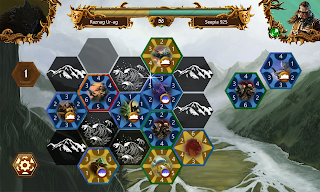
In Permia - Duels, the varying gameboard is one of the key elements of the game. Differently positioned landscapes form a new challenge for each game session and require the players to their update strategies accordingly.

 Jani Rönkkönen / Lead designer of Seepia Games.